
Medical Office & Retail Shell TI | 708 Manhattan Melrose Suites
Project Overview
MEP engineering for architects on a medical office renovation with retail shell provisions—Title 24 compliant, permit-ready design in Los Angeles.
MEP Engineering for Architects: 708 Manhattan – Melrose Suites
Medical office renovations within adaptive reuse buildings require a careful balance of technical performance, flexibility, and future-proofing. Architects leading these projects need an MEP consultant who can coordinate specialized clinical spaces while also supporting landlord provisions for future tenants—without creating scope gaps or permit complications.
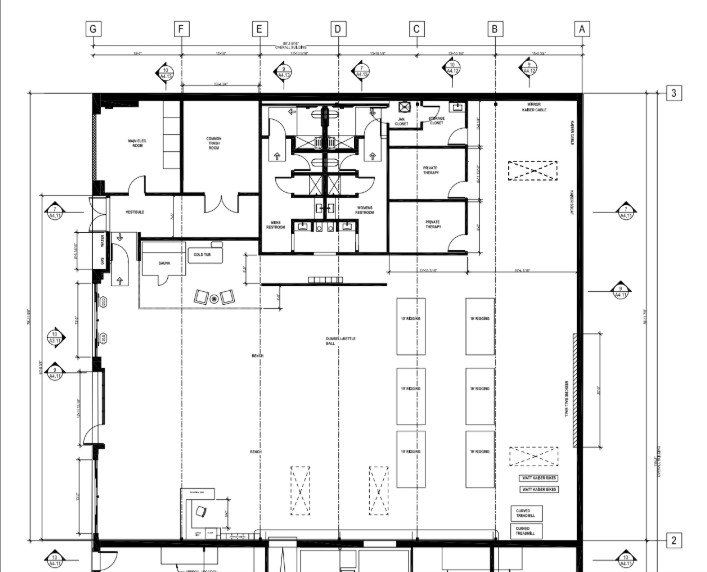
For 708 Manhattan – Melrose Suites in Los Angeles, our team provided mechanical, electrical, and plumbing engineering for the interior renovation of a medical office within an existing commercial warehouse building. In parallel, we delivered core-and-shell MEP provisions for future retail tenant suites along Melrose Avenue, allowing the owner to move forward with leasing while maintaining a clear permitting strategy.
This project reflects our role as a collaborative design partner, supporting architect-led mixed-use renovations with clear coordination and permit-ready MEP design.
Project Scope
How We Support Architects
Coordinating Dual Scopes: Tenant Improvement + Landlord Provisions
This project required two distinct but coordinated scopes:
- Medical office tenant improvement, including reception, therapy rooms, open therapy gym, sauna/cold tub room, support spaces, and restrooms
- Landlord shell provisions for future retail tenants, limited intentionally to core systems
We worked closely with the architect to ensure both scopes were clearly defined, code-compliant, and coordinated—without over-designing spaces intended for future tenant build-outs.
Navigating Existing Conditions in Adaptive Reuse
Warehouse-to-medical conversions often involve undocumented infrastructure and structural constraints. We supported the architect by:
- Reviewing available as-built drawings and verifying site conditions
- Evaluating existing electrical capacity and mechanical infrastructure
- Coordinating new rooftop equipment with existing or reused structural pads
- Documenting assumptions and limitations clearly to manage construction risk
Our MEP coordination approach focused on reducing RFIs and protecting schedule during permitting and construction.
Our MEP Design Approach
Electrical: Flexible, Permit-Ready Distribution
Electrical engineering addressed both current and future needs:
- Interior lighting, controls, and power for medical office spaces
- Title 24–compliant lighting control intent and energy documentation
- Emergency egress lighting layouts and photometric calculations
- Electrical panels and minimum code-required lighting for future retail shells
- Power coordination for mechanical, plumbing, and specialty equipment
This approach allowed the owner to permit the project efficiently while preserving flexibility for future tenants.
Mechanical: Performance and Adaptability
Our mechanical electrical plumbing engineering scope focused on comfort, zoning, and constructability:
- New rooftop HVAC units and air distribution tailored to medical occupancy
- Zoning strategies for therapy rooms, open gym areas, and support spaces
- Exhaust and ventilation coordination for specialty rooms and equipment
- Mechanical Title 24 envelope calculations and compliance forms
Where possible, we coordinated reuse of existing infrastructure to reduce cost and construction impact.
Plumbing: Specialty Spaces and Core Infrastructure
Plumbing design addressed both tenant and shell requirements:
- New restroom plumbing for medical office spaces
- Plumbing systems for sauna and cold tub equipment
- Drainage coordination for HVAC equipment
- Core plumbing provisions for future retail restrooms
Interfaces between tenant work and landlord scope were clearly documented to avoid ambiguity.
Services
Highligths
Why Architects Choose Us as Their MEP Consultant
Architects partner with us on mixed-use and adaptive reuse projects because we understand how scope clarity and coordination affect approvals and liability.
- Architect–Engineer Collaboration: Clear alignment with spatial and program intent
- Medical & Mixed-Use Experience: Familiarity with clinical spaces and landlord shell strategy
- Permit-Ready Documentation: Drawings aligned with AHJ expectations
- Risk Reduction: Early identification of existing-condition and scope-boundary issues
We act as a trusted MEP consultant, helping architects manage complexity without overcomplicating design.
Project Types We Support
This project reflects our broader experience providing MEP engineering for architects on:
- Medical and therapy offices
- Adaptive reuse and warehouse conversions
- Mixed-use buildings with retail storefronts
- Landlord shell and tenant improvement projects
- Phased and future-tenant–ready developments
Across all project types, our focus remains the same: coordinated, constructable, and permit-ready MEP design.
Let’s Collaborate
Let’s Collaborate
If you’re looking for an MEP consultant who understands the realities of adaptive reuse and mixed-use projects—dual scopes, future tenant flexibility, and tight permitting requirements—we’d welcome the opportunity to collaborate.
From early coordination through permitting, we support architects with MEP solutions that reduce friction and protect design intent.
Let’s talk about your next medical, mixed-use, or adaptive reuse project.